PTSD in the Media

Neurofeedback in application to rehabilitation after brain injury
Regaining Control: Neurofeedback & PTSD
Results of Neurofeedback for Iraq War Vet and PTSD Sufferer
Navy LT Shares Results of Neurofeedback Treatment on PTSD
Neurofeedback at the Salvation Army Bell Shelter
Neurofeedback & PTSD
SPECT Scan: Pre-post Neurofeedback for PTSD
The Current Situation
 "The nation's hard-pressed health care system for veterans is facing a potential deluge of tens of thousands of soldiers returning from Iraq with serious mental health problems brought on by the stress and carnage of war..."
This sober appraisal appears in an article by Scott Shane of the New York Times (A Flood of Troubled Soldiers Is in the Offing, Experts Predict). About one soldier in six is reporting anxiety, depression, or symptoms of PTSD. With a total number of soldiers having served in Iraq or Afghanistan now numbering about one million, perhaps as many as 100,000 soldiers will require long-term mental health care, assuming standard treatments. Close to 1000 soldiers have already had to be evacuated from the war theater because of mental status. On the other hand, PTSD may not surface until months after the return from combat duty.
Breakthrough Treatment For PTSD - Post Traumatic Stress Disorder Soldiers Find Relief During Neurofeedback Therapy
by Mark Christian - 23ABC North Of The River Reporter
A relatively little-known treatment for soldiers dealing with post-traumatic stress disorder is gaining some notoriety locally. 23 ABC's North of the River Reporter Mark Christian looks into neurofeedback and spoke to military veterans who have gone through the therapy. continue reading »
Free Your Mind - Controversial neurofeedback brain therapy may be the answer to PTSD
by Katie Drummond
Military doctors struggling to treat post-traumatic stress disorder are quietly adding a new tool to their arsenal: A controversial brain-wave therapy they say can heal troubled veterans and even send once-broken troops back into combat.
Staff Sgt. Justin Roberts is one of hundreds of service members finding relief with the experimental remedy. continue reading »
One In Five Iraq and Afghanistan Veterans Suffer from PTSD or Major Depression
Source - Rand Corporation
Nearly 20 percent of military service members who have returned from Iraq and Afghanistan - 300,000 in all - report symptoms of post traumatic stress disorder or major depression, yet only slightly more than half have sought treatment, according to a new RAND Corporation study. continue reading »
Doctors Preach "Brain Training" to Treat Post-Traumatic Stress Disorder
by Sarah Lucero / KENS 5
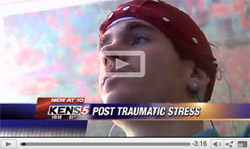 Dr. Ron Swatzyna remembers Nov. 5, 2009, well. That day, Major Nidal Hassan opened fire at Fort Hood, killing 13 people and wounding dozens of others. But all Swatzyna could think about was what must have been going on inside Hassan's mind.
"I think it finally finally set him into a secondary PTSD," said Swatzyna, referring to the post-traumatic stress disorder likely brought about during Hassan's military service. "He had no defense mechanisms to calm himself. And he had issues with anger."
continue reading and watch video of news cast »
Iraq Vets Bringing Home Mental Health Needs at High Rate
by Neil Osterweil
Soldiers and marines who served in Iraq during the current war are seeking mental health services at a high rate within a year of returning home, according to army researchers here. The problems go beyond post-traumatic stress syndrome, although the investigators at the Walter Reed Army Institute of Research counted nearly 22,000 veterans in that category. continue reading »
One In Five Iraq and Afghanistan Veterans Suffer from PTSD or Major Depression
Source - Rand Corporation
Nearly 20 percent of military service members who have returned from Iraq and Afghanistan - 300,000 in all - report symptoms of post traumatic stress disorder or major depression, yet only slightly more than half have sought treatment, according to a new RAND Corporation study. continue reading »
Army's New PTSD Treatments: Yoga, Reiki, "Bioenergy"
Wired - by Noah Shachtman
The military is scrambling for new ways to treat the brain injuries and post-traumatic stress of troops returning home from war. And every kind of therapy - no matter how far outside the accepted medical form - is being considered. continue reading »
Trauma of Iraq War Haunting Thousands Returning Home
USA TODAY - by William M. Welch
MORGANTOWN, W.Va. - Jeremy Harrison sees the warning signs in the Iraq war veterans who walk through his office door every day - flashbacks, inability to relax or relate, restless nights and more. He recognizes them as symptoms of combat stress because he's trained to, as a counselor at the small storefront Vet Center here run by the U.S. Department of Veterans Affairs. continue reading »